•  
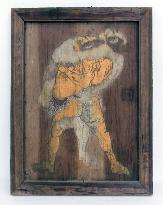
Feudal-era wooden tablet depicts rare sumo technique

Feudal-era wooden tablet depicts rare sumo technique

TONDABAYASHI, Japan - A wooden votive "ema" tablet from the Edo period (1603-1867) kept at a shrine in Kawachinagano, Osaka Prefecture, western Japan, is seen in the western Japanese city on Oct. 16, 2014. The tablet depicts a sumo technique known as "kawazu-gake," or a leg-entangled throw.

  •  
Cotton planting restored in western Japan

Cotton planting restored in western Japan

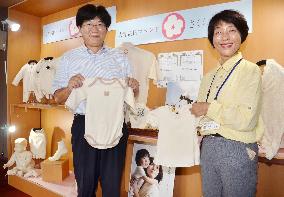
KASHIHARA, Japan - Miho Morita (R), a section chief of the Yamatotakada Chamber of Commerce and Industry, and Yoshihiro Yoshioka, a local researcher of spinning industry history, hold baby wear made of locally grown cotton in Yamatotakada, Nara Prefecture, western Japan, on Aug. 20, 2014. The chamber and local companies collaboratively grow organic cotton to bring back cotton plantation which used to be the biggest business in the region in the Edo era (1603-1867).

  •  
Cotton planting restored in western Japan

Cotton planting restored in western Japan

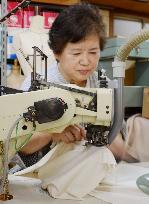
KASHIHARA, Japan - A seamstress makes a baby outfit made of locally produced cotton at a factory in Yamatotakada, Nara Prefecture, western Japan, on Sept. 28, 2014. The Yamatotakada Chamber of Commerce and Industry and local companies jointly grow organic cotton to bring back cotton plantation which used to be the biggest business in the region in the Edo era (1603-1867).

  •  
Cotton planting restored in western Japan

Cotton planting restored in western Japan

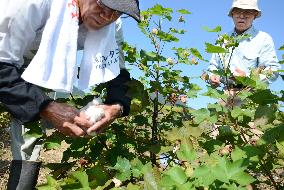
KASHIHARA, Japan - Retired businessmen pick organic cotton flowers for Sakura Cotton Co. in Katsuragi, Nara Prefecture, western Japan, on Sept. 28, 2014. The Yamatotakada Chamber of Commerce and Industry and other parties in the neighboring city of Yamatotakada has restored cotton plantation which used to be the biggest business in the region in the Edo era (1603-1867).

  •  
'Oiran' courtesan parades in Sapporo, northern Japan

'Oiran' courtesan parades in Sapporo, northern Japan

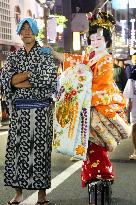
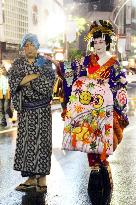
SAPPORO, Japan - Geisha entertainer Botan (R) walks down the street at a festival in Sapporo, Hokkaido Prefecture, northern Japan, on Aug. 6, 2014, performing as an "oiran" traditional courtesan of the highest rank from the Edo era (1603-1867) during an "oiran parade."

  •  
'Oiran' courtesan parades in Sapporo, northern Japan

'Oiran' courtesan parades in Sapporo, northern Japan

SAPPORO, Japan - Freelance anchorwoman Chikage Aoyama (R) walks down the street at a festival in Sapporo, Hokkaido Prefecture, northern Japan, on Aug. 6, 2014, performing as an "oiran" traditional courtesan of the highest rank from the Edo era (1603-1867) during an "oiran parade."

  •  
24K gold box in commemoration of shop's 80th anniversary

24K gold box in commemoration of shop's 80th anniversary

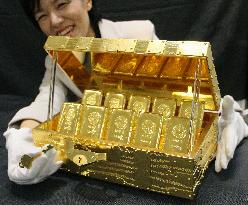
NAGOYA, Japan - Niimi, a jewelry and watch shop in Handa, Aichi Prefecture, central Japan, shows a cashbox in Edo era (1603-1867) style made of 24-carat gold, worth 300 million yen, at a press conference in Nagoya on May 15, 2014.

  •  
Attracting Russian tourists to Japan

Attracting Russian tourists to Japan

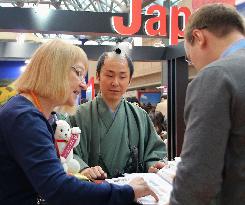
MOSCOW, Russia - A salesman (C), dressed as an Edo-era (1603-1867) man, from the Edo Wonderland theme park in Nikko, Tochigi Prefecture, explains about the facility at the Moscow International Exhibition Travel and Tourism on March 21, 2012.

  •  
15,000 dolls on display in 'Big Doll Festival'.

15,000 dolls on display in 'Big Doll Festival'.

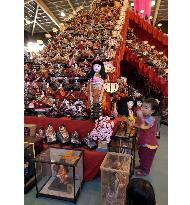
KATSUURA, Japan - A girl sucks her thumb besides some 15,000 dolls put on display for the annual ''Big Hina Matsuri (Doll Festival)'' that began in the town of Katsuura, Tokushima Prefecture, on Feb. 22. The doll festival is celebrated across Japan on March 3. The practice of displaying dolls dates to early in the Edo era (1600-1868). Parents present their daughter with a set of hina dolls and the daughter takes them when she marries.

  •  
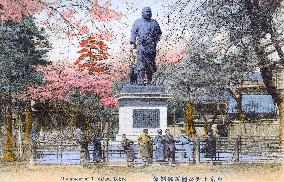
Statue of General Saigo - Ueno Park, Tokyo, Japan

Statue of General Saigo - Ueno Park, Tokyo, Japan

Statue of General Saigo Takamori (Takanaga) (1828-1877). Saigo was one of the most influential samurai in Japanese history, living during the late Edo Period and early Meiji Era. He has been dubbed the 'last true samurai'. The famous bronze statue shown here (of Saigo in hunting attire with his dog) stands in Ueno Park, Tokyo, Japan. Made by Takamura Koun, it was unveiled on 18 December 1898. Date: circa 1910s

  •  
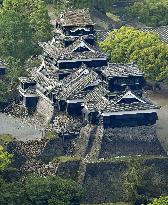
Plans to restore Kumamoto Castle remain up in the air

Plans to restore Kumamoto Castle remain up in the air

The roof tiles and stonewalls of Kumamoto Castle have been badly damaged by a series of quakes in the southwestern Japanese city of Kumamoto, as seen in this photo taken from a Kyodo News helicopter on April 26, 2016. Specific plans to restore the castle remain up in the air, with experts estimating it would take at least 10 years for completion, as it requires adequate financial resources and highly specialized techniques to rebuild the Edo-era stonewalls. (Kyodo) ==Kyodo

  •  
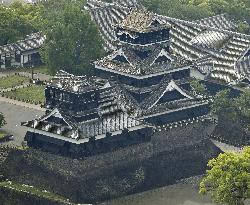
Plans to restore Kumamoto Castle remain up in the air

Plans to restore Kumamoto Castle remain up in the air

The roof tiles and stonewalls of Kumamoto Castle have been badly damaged by a series of quakes in the southwestern Japanese city of Kumamoto, as seen in this photo taken from a Kyodo News helicopter on April 26, 2016. Specific plans to restore the castle remain up in the air, with experts estimating it would take at least 10 years for completion, as it requires adequate financial resources and highly specialized techniques to rebuild the Edo-era stonewalls. (Kyodo) ==Kyodo

  •  
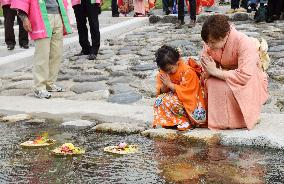
Paper-made "hina" dolls floated on river

Paper-made "hina" dolls floated on river

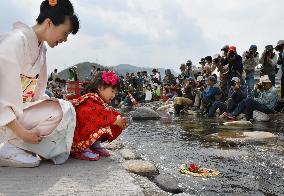
A girl floats paper-made "hina" dolls on a river in the western Japan city of Tottori on April 9, 2016, Girls' Day in the old calendar. The seasonal tradition is said to have started in the Edo era to pray for the health of daughters. (Kyodo) ==Kyodo

  •  
Paper-made "hina" dolls floated on river

Paper-made "hina" dolls floated on river

A girl floats paper-made "hina" dolls on a river in the western Japan city of Tottori on April 9, 2016, Girls' Day in the old calendar. The seasonal tradition is said to have started in the Edo era to pray for the health of one's daughters. (Kyodo) ==Kyodo

  •  
PM Abe receives porcelain gift

PM Abe receives porcelain gift

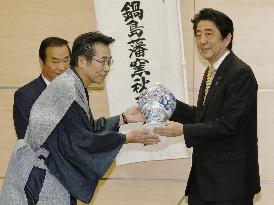
Prime Minister Shinzo Abe (R) receives a sake server made of Imari Nabeshima style porcelain from a representative, wearing a traditional attire, of the porcelain industry in the city of Imari in southwestern Japan. At left in the back is Imari Mayor Yoshikazu Tsukabe. Imari Nabeshima porcelain wares were often used as gifts to shoguns and the imperial court during the Edo era (1603-1868). (Kyodo) ==Kyodo

  •  
West Japan city begins events to mark 200th anniv. of feudal lord's birth

West Japan city begins events to mark 200th anniv. of feudal lord's birth

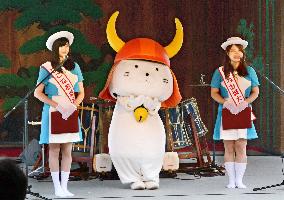
Hikonyan (C), a mascot character of Hikone in Shiga Prefecture, takes part in a ceremony in the western Japanese city on July 10, 2015, to kick off events marking the 200th anniversary of the birth of Ii Naosuke, a feudal lord of Hikone whom locals praise as having played a significant role in opening Japan to international trade and diplomacy toward the end of the Edo shogunate era in the late 19th century. (Kyodo) ==Kyodo

  •  
Expert points to historical importance of naval dock in southern Japan

Expert points to historical importance of naval dock in southern Japan

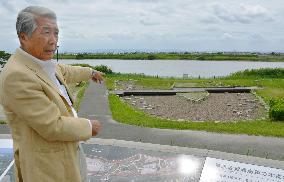
Toshitsugu Haji, head of a civilian group studying cultural heritage in Saga Prefecture, southwestern Japan, talks about the historical importance of the Mietsu Naval Dock, built by the Saga feudal domain near the end of the Edo period (1603-1867), in the prefectural capital on June 20, 2015. The facility is one of the candidate sites of the Meiji-era (1868-1911) industrial revolution Japan is seeking to have registered on the UNESCO World Heritage list. (Kyodo) ==Kyodo

  •  
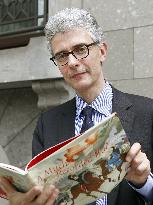
Man in news: British buyer of old photos taken in Japan

Man in news: British buyer of old photos taken in Japan

Sebastian Dobson, a British collector and buyer in Europe of Japanese photos taken in the late 19th to early 20th centuries, poses in Tokyo on May 19, 2015. He says photos taken between the end of the Edo shogunate era and the Meiji period tended to be better kept in Europe. (Kyodo) ==Kyodo

  •  
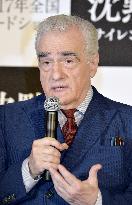
Scorsese at press conference in Tokyo

Scorsese at press conference in Tokyo

Martin Scorsese talks about his new film "Silence" at a press conference in Tokyo on Oct. 19, 2016. The film about a young Portuguese missionary in Japan's Edo era will be released nationwide in Japan on Jan. 21, 2017. (Kyodo) ==Kyodo

  •  
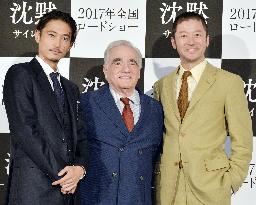
Scorsese at press conference in Tokyo

Scorsese at press conference in Tokyo

Announcing the release of his new film "Silence," Martin Scorsese (C) attends a press conference, together with actors Yosuke Kubozuka (L) and Tadanobu Asano, in Tokyo on Oct. 19, 2016. The film about a young Portuguese missionary in Japan's Edo era will be released nationwide in Japan on Jan. 21, 2017. (Kyodo) ==Kyodo

  •  
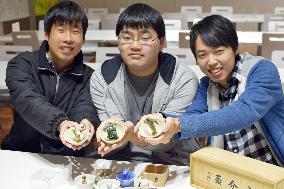
Students promote tricky sake cup dating back to feudal era

Students promote tricky sake cup dating back to feudal era

Students of Nagaoka University in the eastern Japan city of Nagaoka show on Dec. 15, 2015, a "jubunhai," a tricky sake cup that has a siphon inside an ornament at center similar to a Greek Pythagorean cup. When sake is poured to fill more than eight-tenths of the cup's capacity, the liquid will leak out through a hole at its bottom. The students are promoting the cup as a tourism resource, as it was used in the Edo period (1603-1868) by local lords to urge thriftiness, but has since been forgotten. (Kyodo) ==Kyodo

  •  
Tokyo scene: "Robe-hanging pine" by Senzoku Pond

Tokyo scene: "Robe-hanging pine" by Senzoku Pond

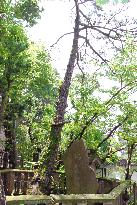
A "robe-hanging pine" stands imposingly at Myofukuji temple by the Senzoku Pond in Tokyo's Ota district on July 10, 2015. Edo-era Buddhist monk Nichiren Shonin, founder of the Nichiren school of Buddhism, is said to have washed his feet at the pond after hanging his robe on the pine before visiting Ikegami Honmonji temple, the citadel of the school. (Kyodo) ==Kyodo

  •  
Old water well used by hospital remains in Tokyo botanical garden

Old water well used by hospital remains in Tokyo botanical garden

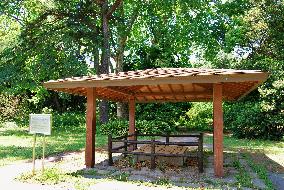
A water well used by an old medical facility dating back to the Edo feudal era (1603-1867) remains in the Koishikawa Botanical Garden in the Hakusan area of Tokyo's Bunkyo district as seen in this photo taken on May 21, 2015. (Kyodo) ==Kyodo

  •  
The Lantern Spectre by Katsushika Hokusai

The Lantern Spectre by Katsushika Hokusai

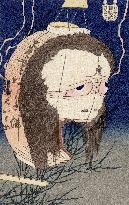
Katsushika Hokusai (1760-1849) - The Lantern Spectre. A burning paper lamp takes on the aspect of a spectral face - one of a set of Ghosts and Goblins. Date: circa 1810

  •  
Fireworks at Ryogoku by Utagawa Hiroshige (Edo series)

Fireworks at Ryogoku by Utagawa Hiroshige (Edo series)

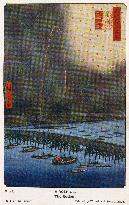
Fireworks at Ryogoku (Ryogoku Hanabi), No. 98 from One Hundred Famous Views of Edo by Utagawa Hiroshige (1797 - 1858) - (see: 10505423 for alternate version).

  •  
The city flourishing, Tanabata festival

The city flourishing, Tanabata festival

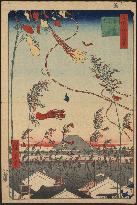
The city flourishing, Tanabata festival. Print shows bamboo decorated with paper streamers and cutouts above the rooftops of the city during the Tanabata festival. Date 1857.

  •  
'Just enough' in Edo-era Japan as key to living green: expert

'Just enough' in Edo-era Japan as key to living green: expert

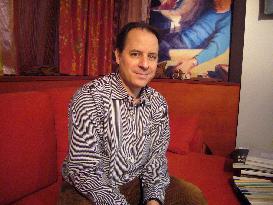
TOKYO, Japan - Azby Brown, associate professor at the Kanazawa Institute of Technology and director at the Future Design Institute in Tokyo, speaks about his book, titled ''Just Enough: Lessons in Living Green from traditional Japan,'' in an interview with Kyodo News at his office in Tokyo on Feb. 2, 2010. (Kyodo)

  •  
A woman wearing a hood of nobility

A woman wearing a hood of nobility

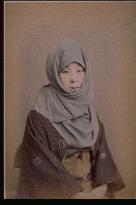
The okosozukin hood was used mainly in the winter by women to avoid the cold, but some men also used them. During the Edo era, it was used from the Kyoho years, and it became very popular during the Horeki years and the Meiji era, and was used until the Taisho era.==Date:unknown, Place:unknown, Photo:unknown, (Credit:Nagasaki University Library/Kyodo News Images) [Cabinet Number15‐12‐0]

  •  
Eboshiiwa, at Enoshima

Eboshiiwa, at Enoshima

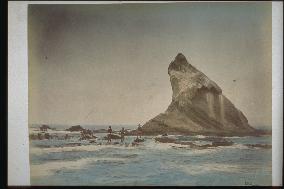
A small island in Sagami Bay, Enoshima was a place of faith from the ancient days, but after the Edo era, pilgrimage to the island also became popular among the common people. Felix Beato, who left many photos of Japan at the end of the Tokugawa era, introduced this island as the island of pictures (E no shima) , and strongly recommended people to visit the site by writing that it is worth a visit .==Date:unknown, Place:Enoshima, Photo:Ogawa Kazumasa, (Credit:Nagasaki University Library/Kyodo News Images) [Cabinet Number7‐16‐0]

  •  
A traditional boat

A traditional boat

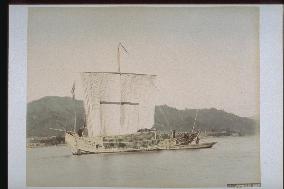
A large cargo ship in the Yamato style. From the design of the ship, it is believed to be of the later Kitamae period. Kitamae boats were active between the Edo era and middle Meiji era for trade with Hokkaido.==Date:unknown, Place:Nagasaki, Photo:unknown, (Credit:Nagasaki University Library/Kyodo News Images) [Cabinet Number6‐27‐0]

  •  
Lake Ashi

Lake Ashi

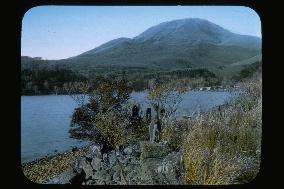
This photo captures the old town of Motohakone, with Mt. Komagadake viewed from Sainogahara by Lake Ashinoko. It is known that Sainogahara had many stone towers and stone Buddhas druing the Edo Period according to Tokaido Hakone Sanchu-zu (Ukiyoe; Color woodblock print of Hakone's everyday life in Edo period by Gountei Sadahide, 1863). This photo was taken after 1868 when Haibutsukishaku (anti-Buddhist movement at the beginning of the Meiji era) took place and many stones were destroyed or broken .==Date:unknown, Place:Hakone, Photo:unknown, (Credit:Nagasaki University Library/Kyodo News Images) [Cabinet Number98‐32‐0]

  •  
Statues of Enmeijizo (giving a long-life) by Lake Ashi

Statues of Enmeijizo (giving a long-life) by Lake Ashi

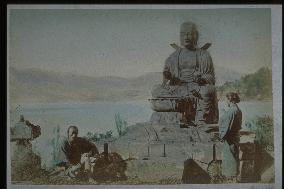
This is Enmei Jizo in autumn, 1871 after Haibutsukishaku (anti-Buddhist movement at the beginning of the Meiji era). Compared with the image in catalogue #5365, the figure's halo is broken, the accompanying jizo figures on the side are gone, and the stone lanterns have been destroyed. There were many stone Buddhas and stone towers as well as this Enmei Jizo in Tokaido Hakon Sanchuzu, documented by a ukiyoe print made by Sadahide Goun during Edo era. It is reported that many were thrown into the lake.==Date:unknown, Place:Hakone, Photo:unknown, (Credit:Nagasaki University Library/Kyodo News Images) [Cabinet Number90‐45‐0]

  •  
Woman dancing to musical instraments

Woman dancing to musical instraments

This is a so-odori or all-geisha singing and dancing performance. The women wear the same costume. Derived from Edo era kabuki dancing, this is a Japanese version of the synchronized dancing of the mid-Meiji Period. From around this time Western music and dancing was becoming popular. This popularization brought the birth of female opera companies like Takarazuka and Shochiku .==Date:unknown, Place:unknown, Photo:unknown, (Credit:Nagasaki University Library/Kyodo News Images) [Cabinet Number83‐2‐0]

  •  
Miyanoshita and Dogashima

Miyanoshita and Dogashima

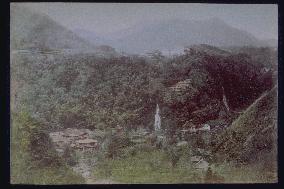
During Edo era, there were Naraya, Edoya, Maruya, Yamatoya, and Ohmiya Inns in Dogashima. The two-story building on the left is Yamatoya, the red tower is Yakushi-do (a Buddhist temple hall housing a statue of Yakushi). The waterfall in the centre is Shirabeno-taki. Godan Ryokan Inn stands above the falls. The white western building on the hill is Naraya Hotel and Fujiuya Hotel is to its left. This photo was taken after the completion of the main buildings in 1891 after the big fire in 1883.==Date:unknown, Place:Hakone, Photo:Tamamura Kozaburo, (Credit:Nagasaki University Library/Kyodo News Images) [Cabinet Number48‐97‐0]

  •  
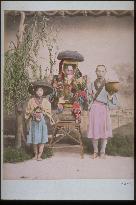
Carrying a stone statue of the guardian deity,Jizo

Carrying a stone statue of the guardian deity,Jizo

There are many photos of pilgrims traveling around Japan at the end of the Edo era. The two in this photo carries this Jizo on their backs, and ring bells to collect donations on the way.==Date:unknown, Place:unknown, Photo:Ogawa Kazumasa, (Credit:Nagasaki University Library/Kyodo News Images) [Cabinet Number44‐14‐0]

  •  
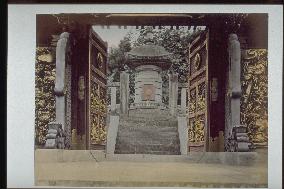
Middle gate of Shotokuin inner building and the treasure tower at Shiba Zojoji Temple

Middle gate of Shotokuin inner building and the treasure tower at Shiba Zojoji Temple

This Hoto is of the Edo era, and the tower on the canopy is called the Fukuhachi style. A sorin is built on the roof. The sorin is the metallic part built on the top of the Buddhist tower, and its foundation is called Kyurin.==Date:unknown, Place:Tokyo, Photo:unknown, (Credit:Nagasaki University Library/Kyodo News Images) [Cabinet Number42‐48‐0]

  •  
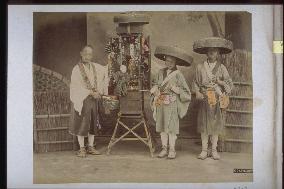
Carrying a stone statue of the guardian deity,Jizo

Carrying a stone statue of the guardian deity,Jizo

There are many photos of pilgrims in temples and spiritual sites all over Japan among the old photos at the end of the Edo era. These photos are taken after the mid-Meiji era after that. The three form a group, and they carry Jizo on their backs, and ring bells as they go to collect donations.==Date:Middle Meiji, Place:unknown, Photo:unknown, (Credit:Nagasaki University Library/Kyodo News Images) [Cabinet Number43‐7‐0]

  •  
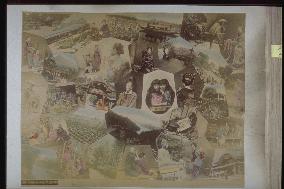
Collage

Collage

A series of collage photos placed in the souvenir photo albums. Daily life and customs during the Edo era which are rare among the westerners, but in the center is a photo of a girl dressed in western clothes.==Date:unknown, Place:unknown, Photo:unknown, (Credit:Nagasaki University Library/Kyodo News Images) [Cabinet Number43‐1‐0]

  •  
Daibutsu or the Great Buddha,Nara

Daibutsu or the Great Buddha,Nara

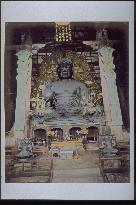
Said to be built by Master Daibutsu maker Kokujuren Kimimaro and Master Caster Takaichi Renshinkoku etc. It was recast following fires in wars, the body during the Kamakura era, and the head in the Edo era. See picture numbered 27-3.==Date:unknown, Place:Nara, Photo:unknown, (Credit:Nagasaki University Library/Kyodo News Images) [Cabinet Number42‐31‐0]

  •  
Nunobiki Falls

Nunobiki Falls

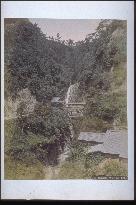
Upper stream of the Ikuta River. Since this was near the foreign settlement, many foreigners visited the site. Many photos were taken of Nunopiki falls from the end of Edo era. The photo is that of the Medaki of Nunopiki falls, to the fore of the falls is a bridge for watching the falls.==Date:unknown, Place:Kobe, Photo:unknown, (Credit:Nagasaki University Library/Kyodo News Images) [Cabinet Number42‐5‐0]

  •  
A tattooed man

A tattooed man

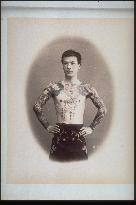
Tattoo was regarded to show the virility of men in the Edo era. There are what looks like letters carved in the chest and stomach of this man, but it cannot be read.==Date:unknown, Place:unknown, Photo:Suzuki Shin-ichi, (Credit:Nagasaki University Library/Kyodo News Images) [Cabinet Number41‐39‐0]

  •  
Entering the sumo ring

Entering the sumo ring

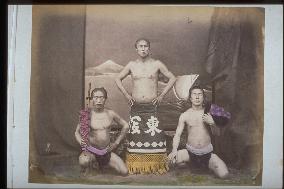
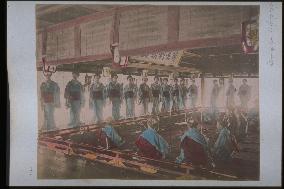
Sumo wrestlers enter the ring with their decorated sashes. But they are too thin to be a sumo wrestler. Sumo developed as an exercise and training feat of the warrior class during the Edo era, as well as amateur and on the spot matches and with Hono sumo (special matches dedicated to the Gods at a Shinto Shrine). It was a highly popular form of entertainment among the masses.==Date:unknown, Place:unknown, Photo:Suzuki Shin-ichi, (Credit:Nagasaki University Library/Kyodo News Images) [Cabinet Number41‐27‐0]

  •  
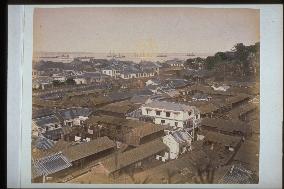
The Kannai foreign settlement seen from the hundred steps of Motomachi,Yokohama

The Kannai foreign settlement seen from the hundred steps of Motomachi,Yokohama

A panorama photo of the Hyakudanue in Motomachi was taken of the Yokohama settlement at the end of the Edo era and the early Meiji era. The fore is Motomachi, and the foreign settlement can be seen over the Hori River.==Date:unknown, Place:Yokohama, Photo:Suzuki Shin-ichi, (Credit:Nagasaki University Library/Kyodo News Images) [Cabinet Number41‐17‐0]

  •  
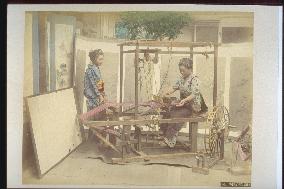
Woman weaving silk

Woman weaving silk

A woman weaves a silk material on a loom. To the right is a spinning wheel. Silk production prospered in Japan after import of silk thread was regulated during the Edo era by means of the thread warifu (quota) system. After that, the silk industry developed into one of the main Japanese exports.==Date:unknown, Place:unknown, Photo:Kusakabe Kinbei, (Credit:Nagasaki University Library/Kyodo News Images) [Cabinet Number40‐48‐0]

  •  
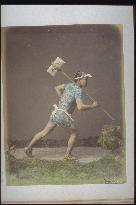
Mail runner with tattoos

Mail runner with tattoos

The hikyaku (communications system carrying messages on foot) developed during the Edo era. Tattoos were thought to be a symbol of virility. The messenger was proud of his tattoo coat which he wore when he ran the route naked. This structure with the messenger leaning forward is popular in this type of photo.==Date:unknown, Place:unknown, Photo:Kusakabe Kinbei, (Credit:Nagasaki University Library/Kyodo News Images) [Cabinet Number40‐37‐0]

  •  
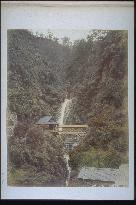
Nunobiki Falls

Nunobiki Falls

Located upper stream from the Ikuta River. Many foreigners visited the spot due to its close location to the foreign settlement. Many photos were taken of the Nunopiki falls from the end of the Edo era. The photo is that of Medaki, and to the fore of the falls, there is a corridor to watch the falls.==Date:unknown, Place:Kobe, Photo:Kusakabe Kinbei, (Credit:Nagasaki University Library/Kyodo News Images) [Cabinet Number40‐26‐0]

  •  
Autumn tints of Takinogawa, Oji

Autumn tints of Takinogawa, Oji

The red leaves of the Takino River was famous since the Edo era, and many novelists and calligraphers visited the site. The name Takino River originates from the alias of the Shakujii River, and that is the river running in the center.==Date:unknown, Place:Tokyo, Photo:Kusakabe Kinbei, (Credit:Nagasaki University Library/Kyodo News Images) [Cabinet Number40‐7‐0]

  •  
Horikiri Iris Garden

Horikiri Iris Garden

The irises in Horikiri were famous from the Edo era, and it was portrayed in the woodblock printing of 100 Famous Spots of Edo by Ando Hiroshige. The structure with the irises in full bloom and a woman in a kimono, of a western taste, shows that the photo was done as a souvenir for foreigners.==Date:unknown, Place:Tokyo, Photo:Kusakabe Kinbei, (Credit:Nagasaki University Library/Kyodo News Images) [Cabinet Number40‐6‐0]

  •  
Bridge at Nakasendo Sakurasawa

Bridge at Nakasendo Sakurasawa

A scene from Sakurazawa (presently Nakano City of Nagano prefecture, formerly Nobetoku village) of the former Nakasendo. To the left, the flow of the Kiso River can be seen. Many of the paddy field were in the low marshes of off Nobetoku, so after the mid-Edo era, people were suffered from numerous floods when the cultivating new paddy fields reached a limit.==Date:unknown, Place:Nagano, Photo:Kusakabe Kinbei, (Credit:Nagasaki University Library/Kyodo News Images) [Cabinet Number38‐29‐0]

  •  
Nagoya Castle

Nagoya Castle

Nagoya castle with its Golden Dolphin-like fish. It is said Kato Kiyomasa built the castle, but in fact he was in charge of building the stone fence only. During the Edo era, at one time the Han's finances were so poor that the Golden Dolphin-like fish was changed into an inferior type casting.==Date:unknown, Place:Nagoya, Photo:Kusakabe Kinbei, (Credit:Nagasaki University Library/Kyodo News Images) [Cabinet Number38‐2‐0]

  • Main
  • Top
  • Editorial
  • Creative
  • About Us
  • About ILG
  • Terms of use
  • Company
  • BEHIND
  • Price List
  • Single Plan
  • Monthly Plan
  • Services
  • Shooting
  • Rights Clearance
  • Support
  • FAQ
  • How To Buy
  • Contact Us
  • Become a Partner

© KYODO NEWS IMAGES INC

All Rights Reserved.

  • Editorial
  • Olympics
  • News
  • Sports
  • Japan
  • Tech
  • Royal
  • Disaster
  • NorthKorea
  • Old Japan
  • SNS
  • Creative
  • Food
  • Japan
  • Landscape
  • Animal
  • Popular
  • #Ukraine
  • #Russia
  • #coronavirus
  • #N. Korea
  • #China
  • #Thailand
  • #Ukraine
  • #Russia
  • #coronavirus
  • #N. Korea
  • #China
  • #Thailand
  • Food
  • Japan
  • Landscape
  • Animal
  • Olympics
  • News
  • Sports
  • Japan
  • Tech
  • Royal
  • Disaster
  • NorthKorea
  • Old Japan
  • SNS